Pacific Rim hiking trails: explore rainforests, beaches and wild coastlines
The rugged western edge of Vancouver Island offers some of the most diverse coastal environments in North America, and Pacific Rim hiking delivers exactly the kind of adventure we live for. From ancient temperate rainforests to expansive sandy beaches, these routes traverse ecosystems shaped by the relentless forces of the Pacific Ocean.
Key takeaways for Pacific Rim hiking
Pacific Rim National Park Reserve spans 511 square kilometers with over 22 kilometers of accessible trails, featuring dramatic tidal fluctuations that can exceed 3.5 meters and directly impact coastal route safety.
The West Coast Trail requires 5–7 days to complete its challenging 75-kilometer route with 108 wooden ladders, 130 bridges, and mandatory advance reservations due to limited daily access.
We recommend visiting between late May and September for optimal conditions, though the region receives over 3,000 millimeters of annual rainfall making waterproof gear essential year-round.
Proper planning includes carrying bear spray, printed tide tables, waterproof maps, and marine communication devices while monitoring weather forecasts and maintaining clean campsites in this active wildlife habitat.
Discovering Pacific Rim National Park Reserve
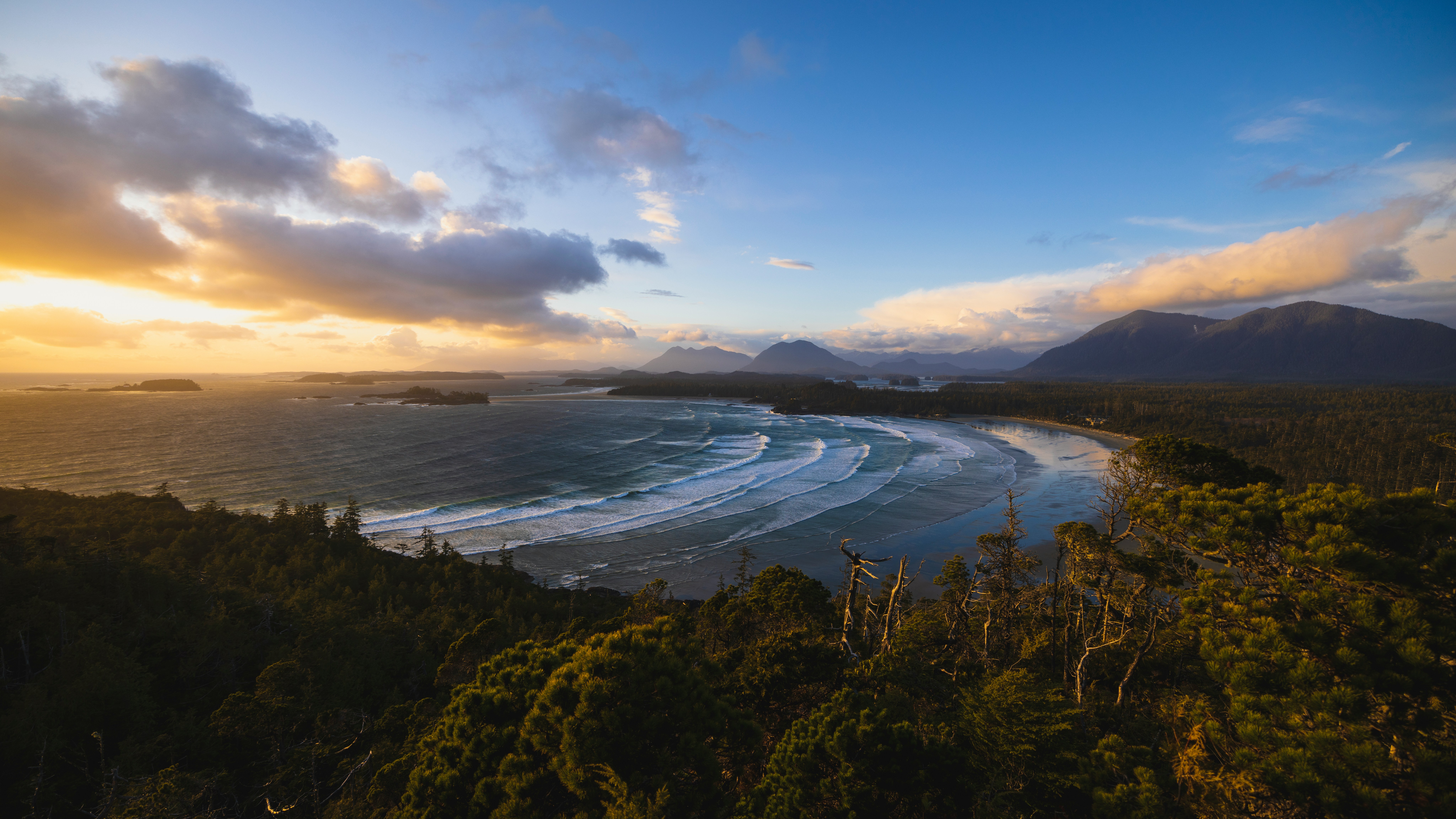
Spanning 511 square kilometers across the western coast of Vancouver Island, Canada, Pacific Rim National Park Reserve is divided into three distinct geographical units: the Long Beach Unit, the Broken Group Islands, and the West Coast Trail. The park receives an average annual rainfall exceeding 3,000 millimeters, which sustains the dense temperate rainforests characterized by towering western red cedars and Sitka spruce trees.
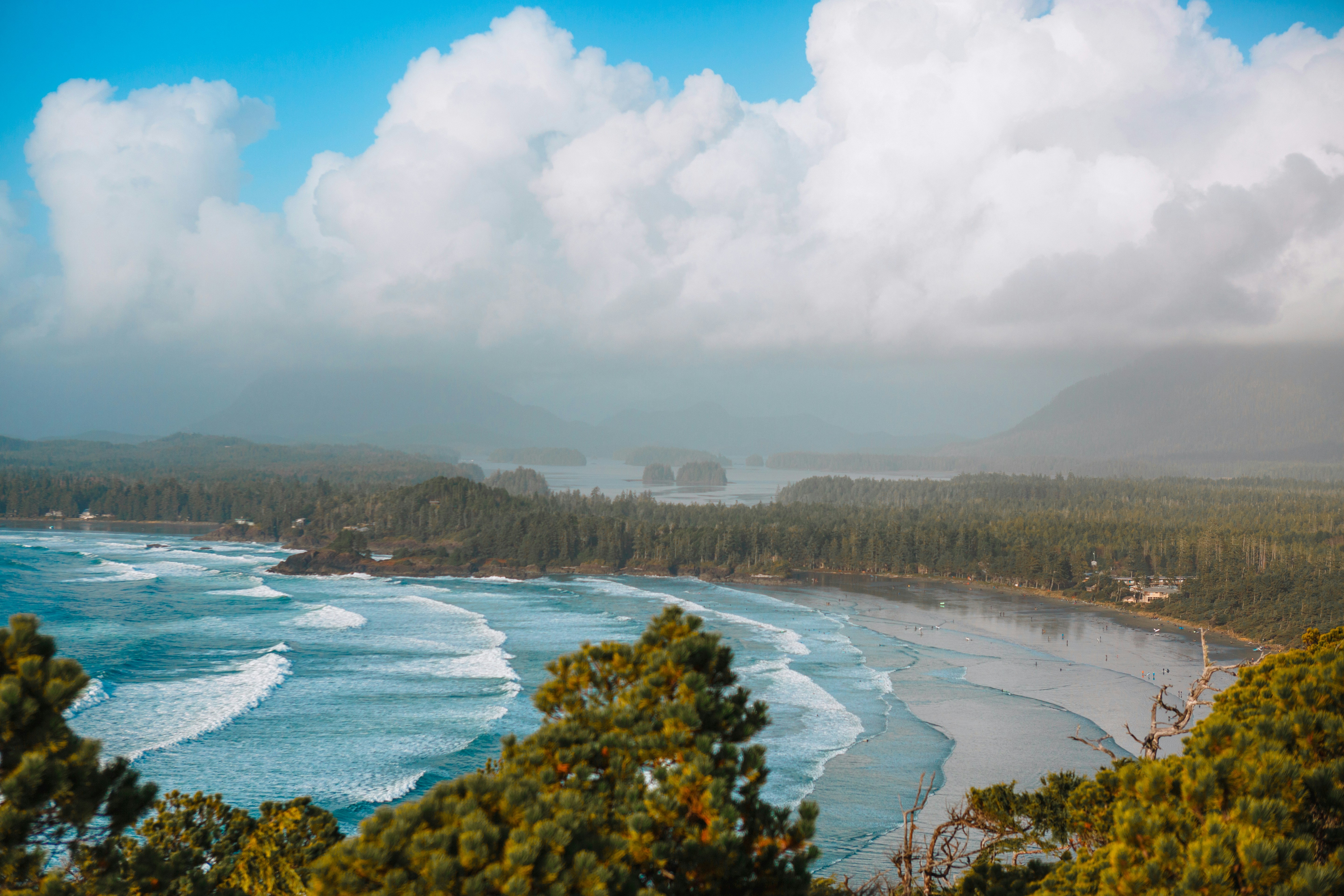
The Long Beach Unit, situated between the coastal communities of Tofino and Ucluelet, serves as the primary hub for day hikers. It features over 22 kilometers of accessible trails and 16 kilometers of continuous sandy beaches. Hiking in Pacific Rim requires navigating a dynamic environment where tidal fluctuations can exceed 3.5 meters, directly impacting beach access and coastal route safety. The region's geological foundation consists of the Pacific Rim Terrane, creating a rugged topography that challenges even experienced trekkers.
Iconic trails of the Long Beach Unit
The Long Beach Unit offers a concentrated network of day hikes that showcase the dramatic transition between dense coastal forests and the open ocean.
Rainforest Trail: immersive forest experience
The Rainforest Trail consists of two distinct 1-kilometer boardwalk loops, designated as Route A and Route B, located on opposite sides of the Pacific Rim Highway. This trail immerses visitors in an old-growth temperate rainforest where some western red cedars exceed 800 years in age and reach diameters of 4 meters. Route B is particularly notable for its structural complexity, featuring exactly 731 wooden stairs that navigate the steep, undulating forest floor. The elevated boardwalks protect the fragile root systems of the ancient trees while allowing hikers to observe the dense understory of sword ferns and epiphytic mosses.
Shorepine Bog Trail: unique ecosystem exploration
Contrasting sharply with the towering rainforest, the Shorepine Bog Trail offers an 800-meter fully accessible boardwalk loop through a highly specialized ecosystem. The soil here is highly acidic and nutrient-poor, resulting in a stunted forest of shore pines that rarely exceed 5 meters in height despite being centuries old. The ground is blanketed by a thick layer of sphagnum moss that can hold up to 25 times its dry weight in water — a rare opportunity to study botanical adaptation in extreme coastal conditions.
Coastal walks: Combers Beach and Halfmoon Bay
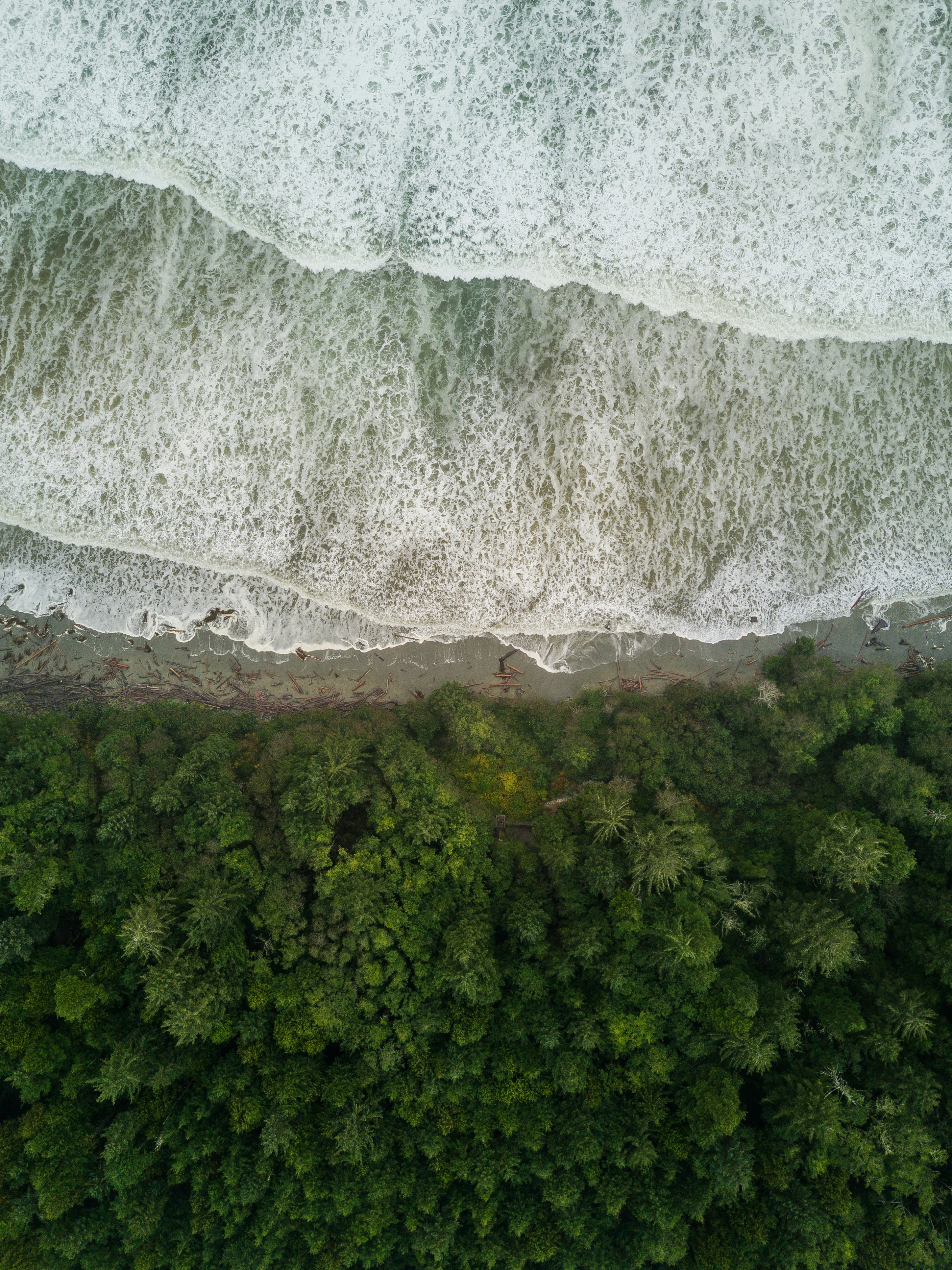
For direct access to the wild Pacific, the trails to Combers Beach and Halfmoon Bay provide short but steep descents from the forest canopy to the shoreline. The Combers Beach trail is a 0.5-kilometer descent that opens onto a wide expanse of sand, often littered with massive driftwood logs deposited by winter storm surges. The Halfmoon Bay trail extends 0.5 kilometers and utilizes a series of steep wooden stairs to reach a secluded, crescent-shaped cove. When exploring these coastal walks, hikers must consult local tide tables, as high tides can completely submerge the walkable beach areas, particularly near South Beach.
Nuu-chah-nulth Trail: cultural journey along the coast
Spanning 3.8 kilometers one-way, the Nuu-chah-nulth Trail connects Florencia Bay to Wickaninnish Beach while honoring the indigenous peoples who have stewarded this land for millennia. The trail transitions through varied terrain, including dense forest canopies, open bog ecosystems, and elevated boardwalks. Hikers typically complete this route in 1.5 to 2 hours, gaining valuable context about the historical significance of the landscape before arriving at the expansive dunes of Wickaninnish Beach.
The legendary West Coast Trail: a multi-day adventure
Recognized globally as a premier backcountry route, the West Coast Trail spans 75 kilometers along the southwestern edge of Vancouver Island. Originally constructed in 1907 as the Dominion Lifesaving Trail to assist shipwreck survivors, it has evolved into one of the most challenging Pacific Rim hiking routes available. Completing the WCT typically requires 5 to 7 days of sustained trekking.
The infrastructure of the trail is highly technical, requiring hikers to negotiate approximately 108 wooden ladders, 130 bridges, and 4 manual cable cars suspended over rushing rivers. Due to the extreme terrain, Parks Canada limits access to 75 hikers per day during the operational season from May 1st to September 30th, making advance reservations mandatory.
| Starting Point | Terrain Difficulty | Elevation Gain | Key Features | Recommended For |
|---|---|---|---|---|
| Pachena Bay (North) | Moderate | Gradual | Tsusiat Falls, Valencia shipwreck site | Hikers preferring to build endurance slowly |
| Gordon River (South) | Severe | Immediate, steep ladders | Owen Point sea caves, Camper Bay | Experienced trekkers wanting the hardest section first |
Navigating the WCT requires careful tide planning. Several sections, such as the route around Owen Point, are completely impassable when tides exceed 1.8 meters. Hikers must carry a comprehensive topographic map and current tide tables to avoid being trapped against the coastal cliffs.
Beyond the main paths: lesser-known trails
Venturing outside the heavily trafficked corridors reveals isolated coastal environments that offer solitude and raw natural beauty.
Cape Beale Headlands: rugged coastal hikes
Located near the community of Bamfield, the hike to the Cape Beale lighthouse is a challenging 6.6-kilometer round-trip journey that exemplifies wild Pacific trekking. Unlike the manicured boardwalks of the Long Beach Unit, this trail is minimally maintained, requiring hikers to navigate deep mud bogs, exposed tree roots, and dense coastal brush. The route traverses the traditional territory of the Huu-ay-aht First Nations and culminates at a fully operational lighthouse established in 1874. Hikers must allocate 4 to 5 hours for this trek and carry reliable navigation tools, as coastal fog can severely limit visibility along the headlands.
Essential planning for your Pacific Rim hike
Proper logistical preparation is the defining factor between a safe, enjoyable coastal expedition and a dangerous wilderness encounter.
Best time to visit and weather considerations
The optimal window for Pacific Rim hiking extends from late May through September, aligning with the region's driest and warmest meteorological conditions. During this period, average daytime temperatures range from 14°C to 19°C (57°F to 66°F). The region receives over 3,000 millimeters of precipitation annually, with winter months bringing severe gale-force winds and massive storm swells. Monitoring marine weather forecasts and carrying high-quality, breathable waterproof layers is mandatory regardless of the season.
Gear, safety, and park regulations
All visitors must purchase a National Park entry pass, which funds trail maintenance and conservation efforts. Safety in this environment requires strict adherence to the Ten Essentials, alongside specific coastal gear:
- Bear spray and wildlife deterrents
- Printed tide tables and waterproof topographic maps
- VHF marine radio or satellite communication device
- High-gaiter waterproof hiking boots
The park is a prime habitat for black bears, cougars, and coastal wolves. Hikers must maintain a clean campsite and hike in groups. Pay close attention to safety advisories regarding tidal cut-off zones and rogue wave hazards along the rocky shorelines.
Accommodation and transportation
Lodging options range from premium Tofino hotels and Ucluelet resorts to primitive backcountry campsites. For front-country camping, the Green Point Campground offers 94 drive-in sites and 20 walk-in sites, requiring reservations months in advance. While the Long Beach Unit is easily accessible via a scenic drive with designated parking areas, accessing the West Coast Trail requires booking a specialized water taxi or utilizing the West Coast Trail Express shuttle service from Victoria or Nanaimo.
Your Pacific Rim hiking journey
A Pacific Rim hiking adventure offers an unparalleled opportunity to engage with one of the most dynamic coastal environments on the planet. From the ancient, towering cedars of the rainforest trails to the relentless surf crashing against the wild coast, every route provides a distinct ecological narrative. Success in this rugged terrain relies heavily on precise planning, respect for tidal fluctuations, and a commitment to environmental stewardship. The best adventures happen when you follow curiosity, not crowds — and these trails reward those who take the time to prepare thoughtfully for what the wild Pacific has to offer.
Frequently Asked Questions
How long does it typically take to hike the Pacific Rim's main trails?
Day hikes in the Long Beach Unit typically take 1 to 3 hours to complete. Conversely, the 75-kilometer West Coast Trail requires 5 to 7 days of sustained backcountry trekking.
What are the best trails for beginners or families in Pacific Rim National Park Reserve?
The Rainforest Trail and Shorepine Bog Trail are ideal for beginners, featuring flat, well-maintained wooden boardwalks. The Schooner Cove trail also offers an accessible 2-kilometer round trip to the beach.
Are there opportunities for multi-day hiking and camping in the park?
Yes, the West Coast Trail is the premier multi-day route, requiring advance permits and backcountry camping. Front-country campers can book sites at the Green Point Campground in the Long Beach Unit.
What is the best time of year to go hiking in Pacific Rim National Park?
The most favorable conditions occur between late May and September, offering warmer temperatures and lower precipitation. However, hikers should always prepare for sudden rain and coastal fog.

Written by
Simon
Passionate about exploring the outdoors — mountains, lakes, and wild coastlines.